Concrete cancer repair
Concrete cancer is the reinforcement inside the concrete rusting and pushing the cover off from within. It does not stop on its own and the repair grows with time. We inspect, write a scope and quote that scope, so a committee has something real to vote on — not a number with no working behind it.
Concrete cancer gets worse and more expensive the longer it runs, so catching it early is the whole game. These are the signs, roughly in the order they appear — the first few are early warnings, the last few mean it has already spread.
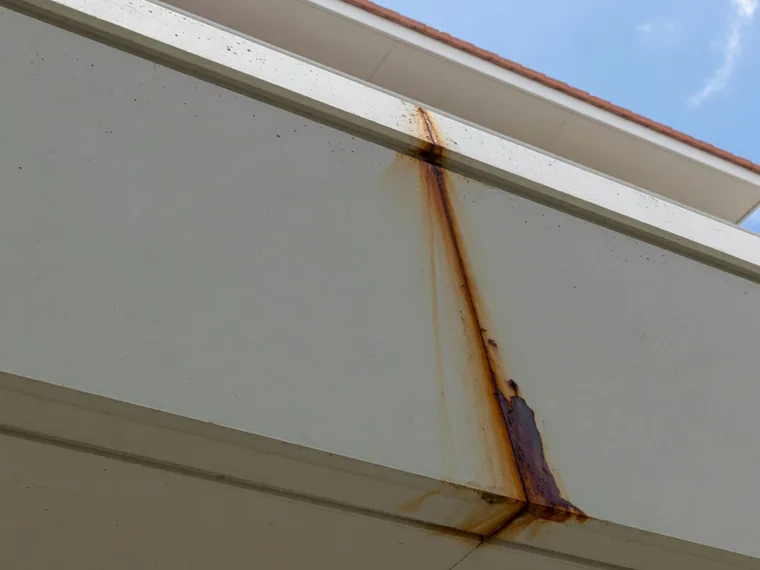
A brown or orange stain seeping out of the concrete face. The steel bar inside has started to rust, and the rust is being carried out through the tiny gaps in the concrete. It is usually the first sign, and an easy one to paint over.
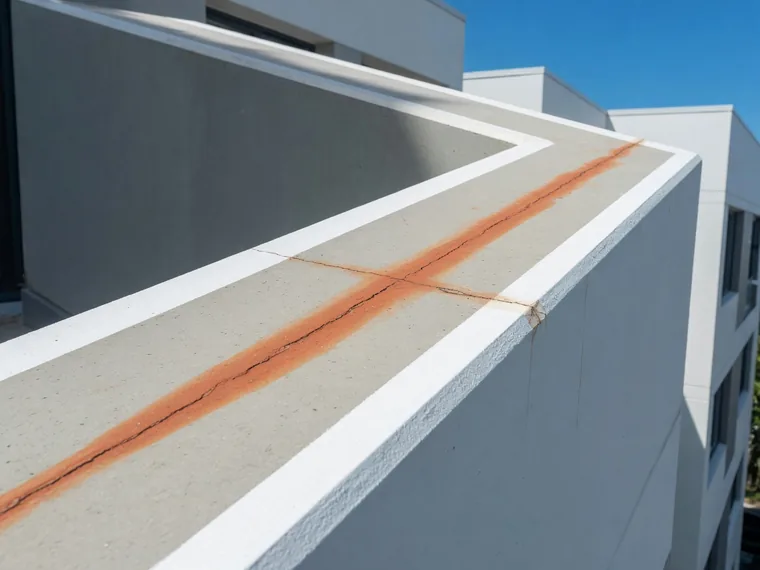
A crack that runs straight instead of wandering. It is following a steel bar buried just behind it. Rust takes up more room than clean steel, so as the bar rusts it swells and splits the concrete along its length. Shrinkage cracks wander; these do not.
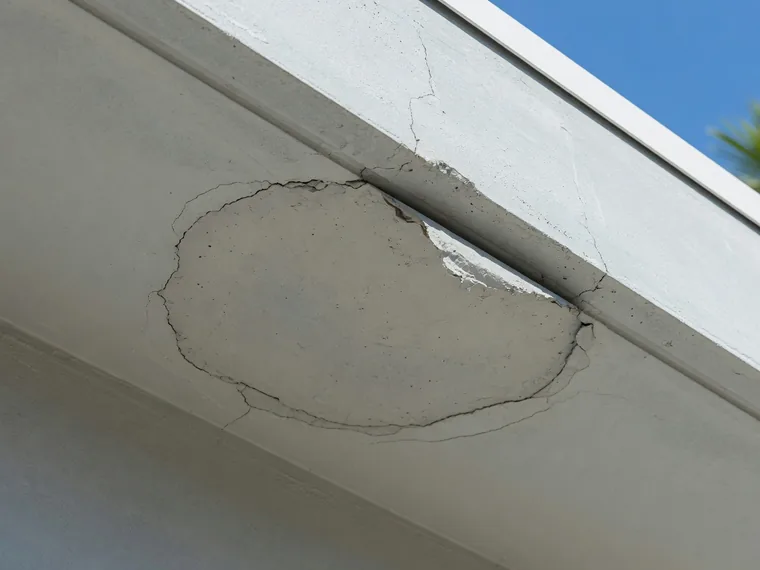
Concrete that gives a drummy, empty sound instead of a solid one. The outer layer has already come away from the steel behind it but has not fallen off yet. Treat it as urgent: the next stage is a piece landing on someone.
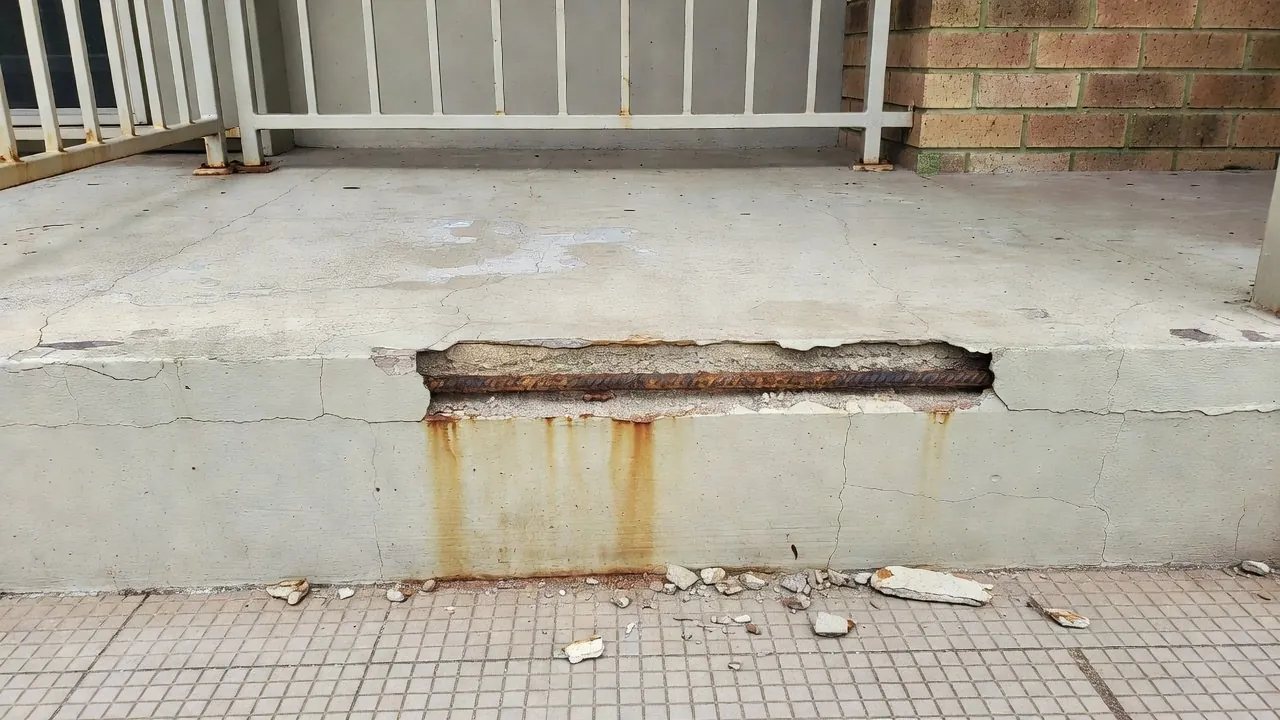
Pieces of the surface breaking off, which is called spalling. Once that outer layer is gone the steel is open to the weather and rusts much faster. This is the point where a repair stops being something you can put off.
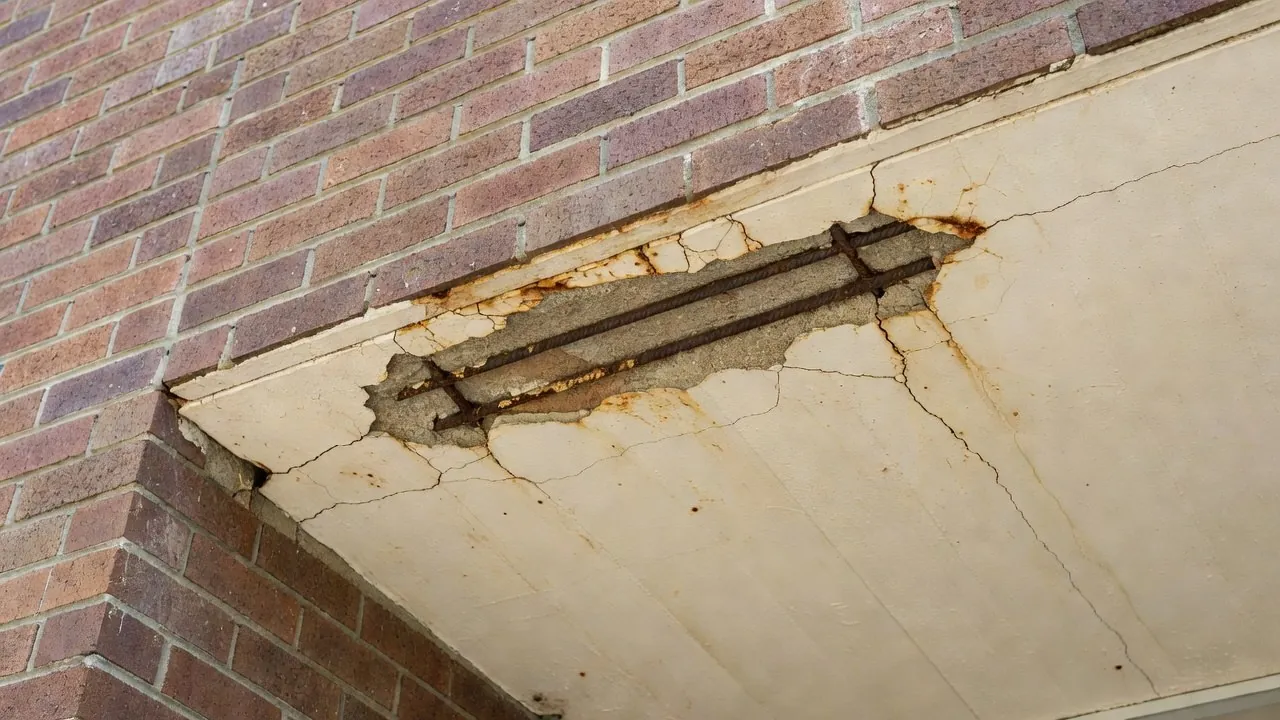
Steel you can see, usually orange and sometimes visibly thinner than it should be. A bar that has lost thickness has lost strength, which turns a maintenance problem into a structural one.
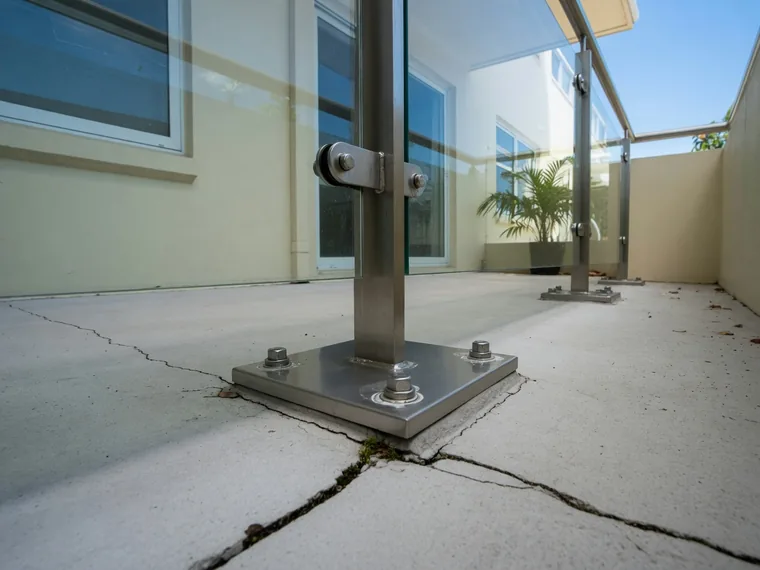
A rail that moves when you lean on it. Its fixings are set into concrete that is breaking up around them. On a balcony this is a safety problem before it is a repair job, and the area should be closed off rather than added to a list.
Concrete buildings have steel bars running through them. The steel is what stops the concrete bending or breaking, and the concrete is what stops the steel rusting.
Fresh concrete is chemically harsh in a way steel likes — it puts an invisible skin on the bar that keeps rust off. Over decades, air and water and salt work into the concrete and wear that protection away. Once it is gone, the bar starts to rust.
Here is the part that does the damage. Rust takes up as much as six times the room that clean steel does. So the bar swells — inside concrete, which cannot stretch. It pushes outward until the concrete cracks. Those cracks let in more water and air, which makes the bar rust faster, which opens the cracks wider. It feeds itself.
That is why it is called cancer. Nothing is eating the concrete; the steel inside is swelling and breaking it apart from within. And it does not stop on its own. By the time a lump falls off a balcony, it has usually been going on for years.
Look first at reinforced concrete built between the 1960s and the 1980s, and anywhere salt air reaches the steel.
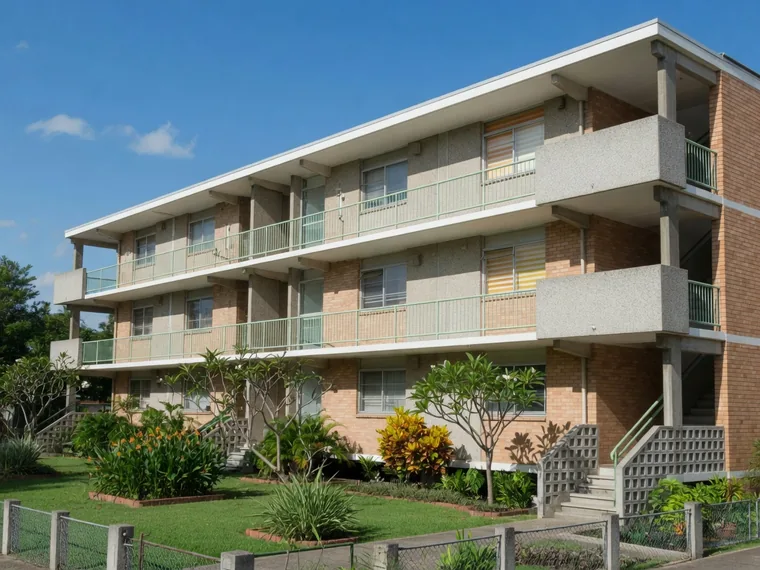
The core of this problem in Brisbane, for the age reason set out below. Balconies, spandrels and access walkways are exposed on every face, so they carbonate from both sides and reach the steel sooner.
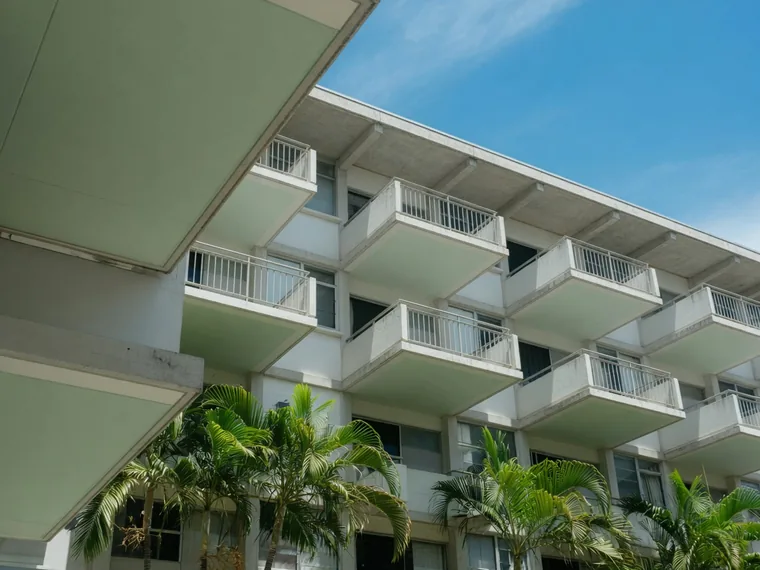
The element most exposed on a walk-up block. A balcony has thin cover, sits in the weather, and relies on a membrane that may have failed. Water gets to the top reinforcement and the failure appears on the underside as staining and then spalling.
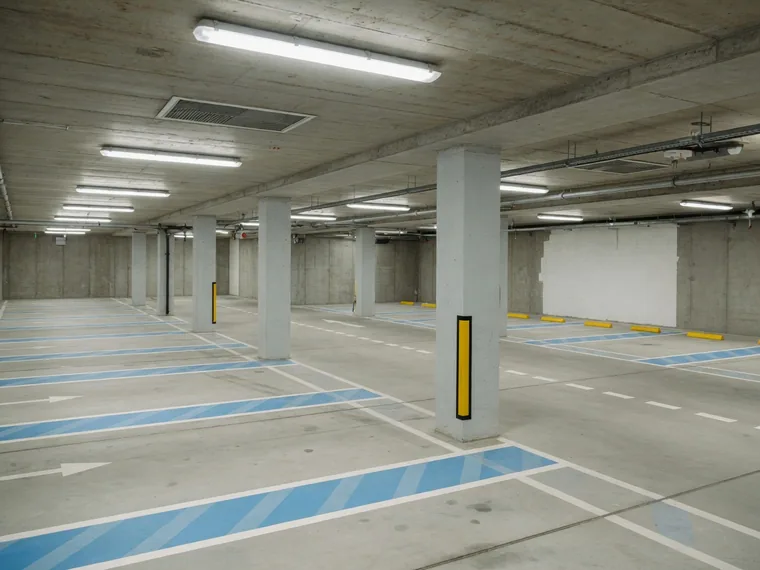
Chlorides can arrive on vehicles in coastal suburbs, water can pond where the falls are poor, and ventilation may be limited. Soffit spalling over parking bays is both a durability problem and a falling object risk, which is why it should be treated as urgent.
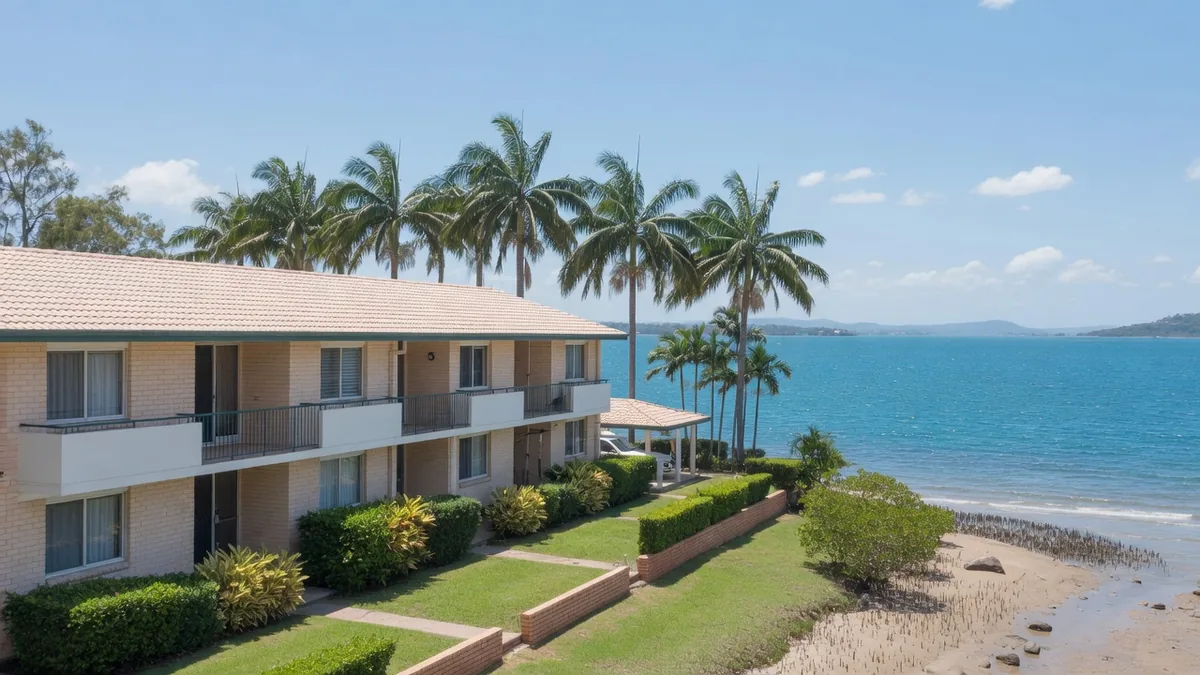
Anything within reach of Moreton Bay air, where chloride (explained below) adds to carbonation. On the river frontage the main factor is humidity; whether chloride is present there is a matter for a test, not an assumption.
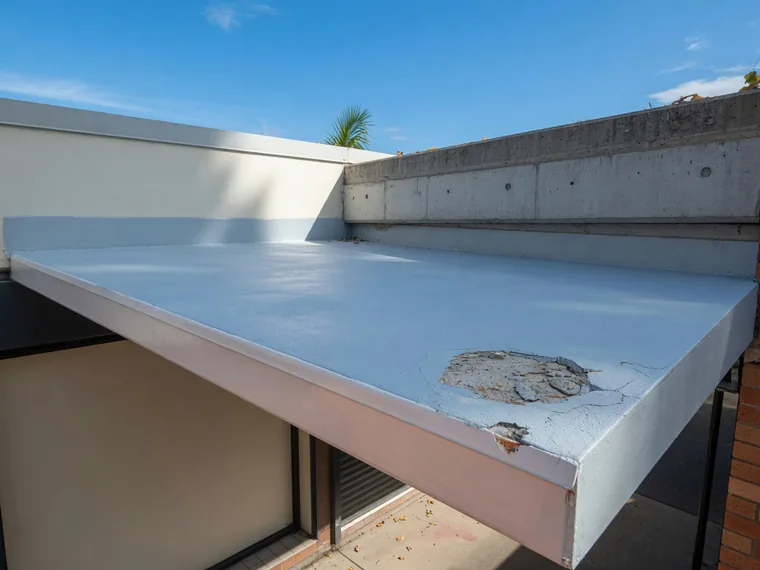
Small elements with very thin cover, easy to leave out of maintenance plans until a piece drops. Cheap to fix early, disproportionately disruptive when they fail over a footpath.
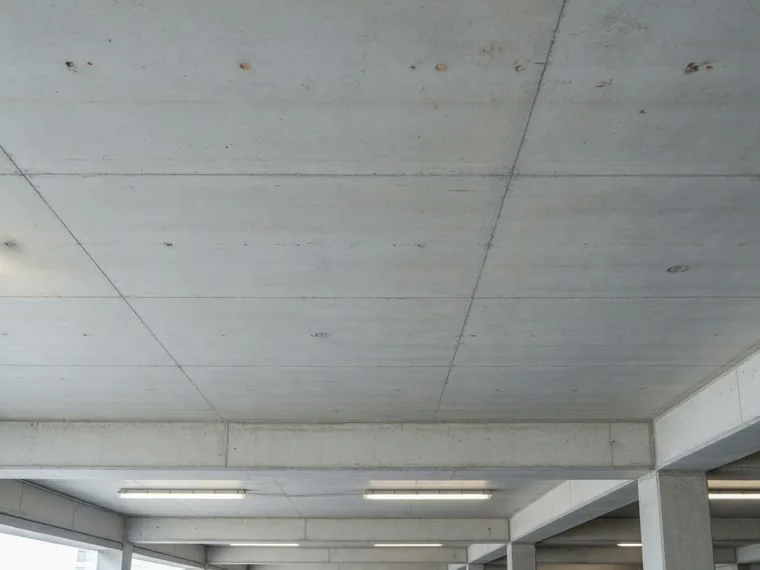
Less common and much more serious. Corrosion of a post-tensioning tendon is a structural matter, not a cosmetic one, and it needs a structural engineer rather than a patching contractor. Any inspection should establish early whether a slab is post-tensioned.
Three things compound here. Heat and humidity: corrosion needs moisture and oxygen, and reaction rates roughly double for every ten degrees, so a subtropical climate runs the process faster all year rather than pausing over winter.
Salt air: anything within reach of Moreton Bay collects airborne chloride, and chloride is far more aggressive than carbonation — it breaks the steel's protection locally and pits the bar rather than degrading it evenly, so damage concentrates and arrives sooner. The river is a different case: a riverfront building takes humidity, and whether chloride has reached its steel is something to test, not assume. Each suburb page gives its measured distance to the bay.
The building stock: Brisbane's walk-up unit blocks from the 1960s to the 1980s were built when concrete cover requirements were lower than AS 3600 now demands and the concrete itself was more permeable. Those buildings are now at exactly the age where carbonation reaches the steel on its own, without any help from the coast.
We compared two Bureau of Meteorology stations, Brisbane and Melbourne (Olympic Park), to put a number on the heat. These are the Bureau's long-term averages, not our estimates.
| Month | Brisbane max / min | Melbourne max / min |
|---|---|---|
| January | 30.4 / 21.7 °C | 26.8 / 16.5 °C |
| April | 27.2 / 17.4 °C | 20.8 / 12.2 °C |
| July | 22.0 / 10.5 °C | 14.5 / 7.5 °C |
| October | 27.2 / 16.6 °C | 20.5 / 10.9 °C |
| Year | 26.7 / 16.5 °C | 20.5 / 11.7 °C |
| Rain, year | 1,055.9 mm | 577.7 mm |
Source: Bureau of Meteorology climate averages, Brisbane, station 040913 (records from 1999) and Melbourne (Olympic Park), station 086338 (records from 2013). Read on 14 October 2026.
What we take from it. Averaging the daily maximum and minimum, Brisbane runs at about 21.6 °C across the year and Melbourne at about 16.1 °C. Brisbane's coldest month, July, averages about 16.3 °C, so Brisbane concrete never gets a month as cool as Melbourne's ordinary year. The gap is about 5.5 degrees. On the rule of thumb above, doubling for every ten degrees, that is roughly one and a half times the corrosion rate once the steel is exposed. That is an estimate from a rule of thumb, not a measurement of any building. It is why we do not treat a quiet Brisbane winter as time the damage stops. Brisbane also gets nearly twice the rain, and more than half of it falls from December to March, the hottest months.
Published ranges, so a committee can budget before anyone inspects the building.
| Work | Indicative range | What it covers |
|---|---|---|
| Inspection and written scope | $450 plus GST | A hammer tap survey to find drummy areas and cover meter readings, then a defect schedule and a written scope your committee keeps. Every price below is quoted only after that visit. |
| Structural engineer's report | $1,800 – $4,500 | Where the extent is unclear, a slab is post-tensioned, or the committee needs a structural engineer's opinion before committing to a levy. |
| Concrete repair, patch method | $650 – $1,400 per square metre | Cut back to sound concrete, expose and treat the steel, then reinstate with a repair mortar. The standard remedial approach for localised spalling. |
| Crack injection | $180 – $420 per linear metre | Epoxy or polyurethane injection where cracking is the route in and the steel is not yet badly affected. |
| Sacrificial anodes, per anode | $95 – $180 | Zinc anodes set into the repair to protect the surrounding steel. Worth it where chloride is present, because a patch alone can accelerate corrosion at its edges. |
| Balcony repair and re-membrane, typical unit | $4,500 – $16,000 | Concrete repair plus a new waterproof membrane and finish. Doing the concrete without the membrane simply schedules the next repair. |
| Protective anti-carbonation coating | $55 – $110 per square metre | Applied after repair to slow further carbonation. It is maintenance, not a cure, and it does nothing for steel that is already corroding. |
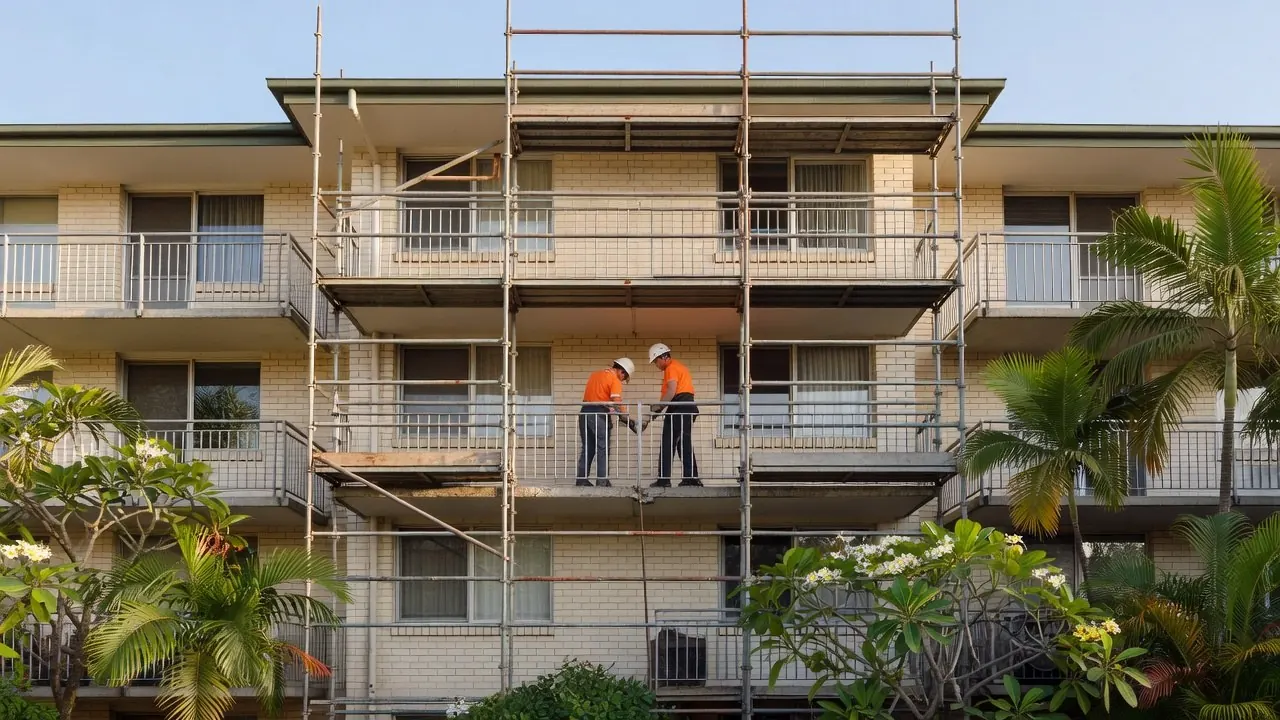
| Full remediation, small walk-up block | $60,000 – $400,000 | The range is enormous because access, extent and whether scaffolding or swing stages are needed dominate the cost. This is why a scope comes before a number. |
Prices are indicative ranges only. Remedial concrete work is priced from a scope prepared after inspection, and a fixed quote follows that.
How these figures were set: the $450 plus GST inspection is the one fixed price, set on 8 September 2026. The repair ranges were entered when the site was built in August 2026 and have not yet been checked against our own written quotes, so treat them as a budget guide only.
Step 1
A description and photographs of the worst area. For a body corporate, any previous reports or a sinking fund forecast help the inspector judge what stage this is at.
Step 2
Hammer tap survey to find drummy areas, cover meter readings, and where warranted half-cell potential testing to map where corrosion is actually active rather than where it is merely visible.
Step 3
Quantified: how many square metres of patch repair, how many linear metres of injection, how many anodes, what access. It is the document the quote is built on, so a committee can see exactly what it is paying for.
Step 4
Every line of the quote ties back to a line of the scope. Without that, a lower price can mean less work rather than better value, and that is very hard to see from a committee meeting.
Step 5
General meeting, sinking fund or special levy. The written scope gives the committee what it needs to put the resolution together, and we state the consequence of deferring in writing.
Step 6
We do the repair, protection and reinstatement as one job, on time and without wasted visits, and then leave a plan for what to inspect and when. Concrete cancer is a durability problem, and durability problems recur where nothing changes about how the building is maintained.
Written for someone who has to explain a recommendation to other people.
Who pays, what a quote should be built on, and how to put a levy resolution together that survives a general meeting.
For committeesThe question that decides whether the repair needs an engineer's design first, and how it is answered.
Structural or notThe honest version, with the cost of deferring attached — because a committee will always ask.
Deferring the workHammer tap survey, cover meter, half-cell testing, and the defect schedule the quote is built on.
What an inspection involvesCut back, treat the steel, reinstate. Why the method matters more than the price per square metre.
Repair methodThe most exposed element on a walk-up, and why concrete without a new membrane just schedules the next one.
Balcony workVehicle-borne chloride, ponding and poor ventilation — plus a falling object risk over occupied bays.
Car park workTwo different mechanisms with different speeds, patterns and repairs. Bayside buildings can have both.
Telling them apartThe earliest visible sign, how to tell it from harmless tie-wire spotting, and why painting over it costs more.
Rust stainingHollow-sounding cover that has already separated from the steel, often over a larger area than the visible damage.
Drummy concreteSinking fund, special levy, staged programme or borrowing, and what makes a resolution survive the meeting.
Sinking funds and leviesThe steel bars inside the concrete are rusting. Concrete normally protects that steel from rust, but over the years air, water and salt wear that protection away. Rust takes up several times more room than clean steel, so as the bar rusts it swells and cracks the concrete from the inside. What you can see on the surface is the last stage, not the first.
It depends on how much steel has been lost, and where. If a bit of surface has flaked off a decorative panel, that is a durability problem — ugly, and it will get worse, but the building is not at risk. If steel has thinned inside a balcony that hangs out from the building, or inside a tensioned slab, that is structural and needs an engineer rather than a patching contractor. Working out which one you have is the main thing an inspection is for.
It gets worse, and then it gets more expensive. Once the surface breaks off, the steel is out in the open and rusts faster. The job grows from patching small areas to replacing sections. And concrete falling from a balcony becomes a safety and liability problem for the body corporate. Waiting is a decision, and it has a price — the honest way to put it to a committee is with that price attached.
Heat and humidity. Rust needs moisture and air, and the warmer it is the faster it happens — roughly twice as fast for every ten degrees. So a subtropical climate runs the process all year instead of part of it. Add salt in the air near Moreton Bay, and buildings from the 1960s to the 80s that were built with less concrete over the steel than the rules require today.
No, and it is an expensive mistake. Paint traps moisture against concrete that is already rusting inside, and hides the damage while the steel keeps thinning. Render over breaking concrete falls off in sheets within a few years and takes more of the surface with it. Coatings do have a proper place — after the repair, never instead of it.
In Queensland, shared parts of the building are usually the body corporate's responsibility and things inside your own lot are yours. Balconies sit right on that line and can be argued about, and the answer depends on your plan and by-laws. Sort this out BEFORE the work is scoped, because it decides who is paying. We are not lawyers and this is not legal advice — check it with a strata lawyer or your body corporate manager.
A repair done properly, protected and maintained, should last decades. A cheap patch on a building with salt in the concrete can start failing around its edges within a few years. There is a reason for that: patching changes the electrical balance in the concrete and can actually speed up rusting in the steel just outside the patch. Small metal blocks called anodes are fitted to stop that. It is why HOW the repair is done matters more than the price per square metre.
Yes. One specialist takes the job from the inspection to the finished repair: the breakout, treating or replacing the steel, the repair mortar, anodes where chloride is present, and the protective coating. Where the damage is structural, a structural engineer specifies the repair before we start, and we work to that design.
The suburbs below cover the 1960s–80s walk-up belt and the bayside strip, where salt air can reach the steel faster.

Tell us what the concrete is doing. We will inspect it and give your committee a written scope and a quote it can actually vote on.
